comics
The Turtles Archie Made: A Cartoon Tie-In That Grew Its Own World
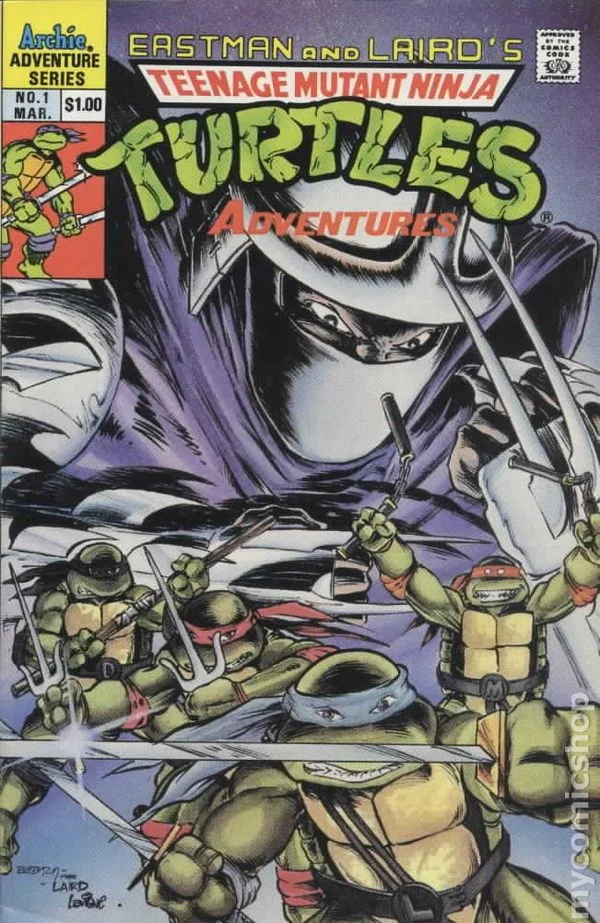
Archie's Teenage Mutant Ninja Turtles Adventures began as an adaptation of the cartoon and became the place where the Turtles' universe got bigger than either the cartoon or the black-and-white book.
Fans who grew up with the Turtles tend to carry two comics in their heads, and the two rarely overlap. One is the Mirage book, black and white, violent and dry. The other is the colourful, lighter comic from Archie Comics, the company best known for Archie Andrews, which put the Turtles on the page in a licensed spin-off of the 1987 cartoon. Teenage Mutant Ninja Turtles Adventures looks on paper like the second kind of book, a tie-in of the sort that normally repeats what the television show has already done.
It did not stay that kind of book. It introduced a long list of supporting characters, it ran for years, and it wandered far enough from its source that it stands as a world of its own. The usual story is that comics follow the cartoons they are licensed from. This one took the cartoon as a starting point and kept going.
Heroes in a Half Shell
Archie began with a limited series in 1988, collected later under the title Heroes in a Half Shell. The monthly book followed in the spring of 1989 and ran until October 1995.1 The opening issues adapted the cartoon, which was the sensible thing for a licensed book to do: the show was on every Saturday, and a comic that put it on the page for readers who wanted more of it was an easy proposition.
The change came at issue five. Wikipedia records that Eastman and Laird handed the series over at that point to the Mirage artists Ryan Brown and Stephen Murphy. The book moved to original stories from there.2 The same article notes that the issues around that point give different origins to familiar characters, and it describes a plot thread about the Eye of Sarnath that has no counterpart on television.
Here is what the Archie book comes down to, in plain words: it is a comic handed to artists from the studio that made the darker original, and the pleasure of it lies in watching them invent inside a lighter world. A child-friendly licence would ordinarily limit what a writer can do, but this one left room for new ideas to arrive faster than the cartoon could absorb them; whether the freedom was planned or merely tolerated, the series grew sideways.
A bigger cast
What the book left behind is mostly characters. Wingnut and Screwloose, an alien bat and an alien mosquito from the planet Huanu, make their first appearance in issue 8. They later join the Mighty Mutanimals, the team that went on to spin-off books of its own.3 (Wingnut also turns up in the 1987 cartoon, and our character page covers him there.) Armaggon is a time-travelling talking shark with a grudge, and he anchors the Future Shark trilogy. The article lists Man-Ray, Jagwar, Dreadmon, Mondo Gecko, Ninjara, Null, Verminator-X and Chameleon among the original characters of the series, and it credits Ryan Brown with Katmandu, a four-armed tiger, and with co-creating May East.
The credit for all this was shared among a small group. Jim Lawson co-created Al Falqa, Michael Dooney co-created Jagwar, and Cudley the Cowlick, a small and slightly ridiculous character, was the invention of the Mirage staff artist Steve Lavigne. It looks like a team drawing from the same toy box, with the comic as the place where anyone’s idea could be tried out.
A tie-in book normally stays inside the borders that the television show established, and this one kept moving them. A reader of the Archie series learned a universe in which alien animals, mutated sea creatures and time travellers all had a place beside the sewer and the four brothers. Because the characters kept arriving without much explanation, the series feels less like a brand extension than like a sandbox!
The shelf around the main book
The monthly series sat in the middle of a sizeable family of titles, and our catalogue holds most of them. There is a one-shot called Return of the Shredder and there are adaptations of the three live-action films. A Mighty Mutanimals special called Invasion from Space sits beside a Conservation Corps special. An Adventures Special series and a Giant Size Special series ran in the early nineties, and a two-part Mutant Universe Sourcebook arranged the Turtles’ universe like an encyclopedia, with the first part running A to M and the second N to Z.4
Three limited series in 1993 gave individual characters their own books: April O’Neil in the spring, Donatello and Leatherhead in the summer, and Merdude in the autumn. A further limited series in early 1996, commonly known as The Year of the Turtle, followed the monthly book’s end. Between them they show how much of the Archie material was built around characters rather than around plots, as if each supporting player had been quietly auditioning for a book of their own.
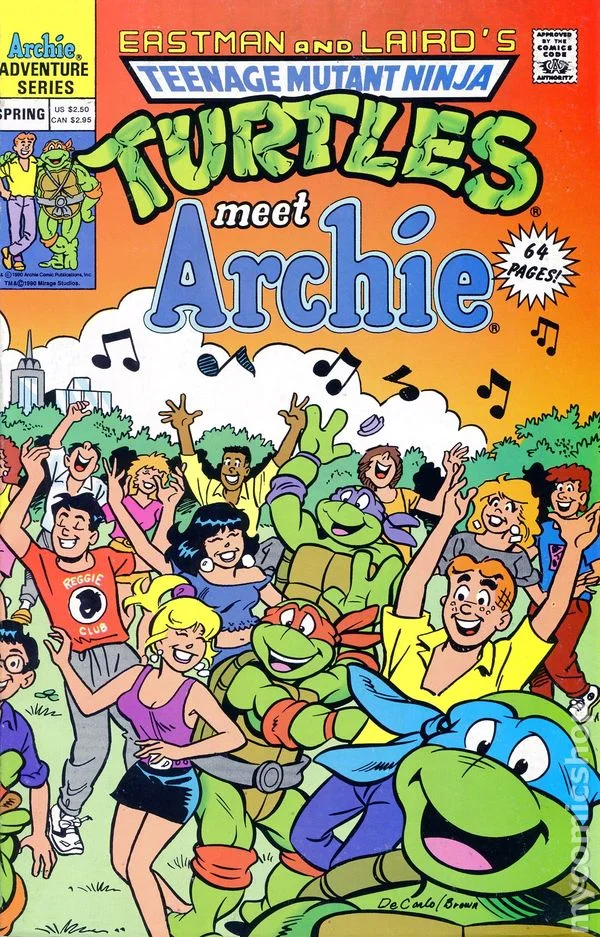
The oddest title in the list is the Meet Archie one-shot from the spring of 1991, in which the Turtles cross paths with Archie Andrews himself.5 It is the only crossover with the publisher’s own characters mentioned in what we have read, and the cover is worth seeing for the sheer unlikeliness of it.
The reprints
Archie reprinted the book in a quarterly digest in 1993 and 1994, starting from issue five. IDW began reissuing the run in 2012 as a series of paperbacks, the last of which appeared in December 2018. Wikipedia reports that those paperbacks left out a block of issues in the thirties, which it says were excluded as culturally offensive, and that the omitted issues were gathered later in compendium editions.6 We have not seen IDW’s own statement on the choice and do not want to put words in its mouth, so we note only that the gap exists and that readers who want the full run need the compendiums.
Where to start
If you want the book in its simplest form, begin with the three-issue Heroes in a Half Shell to see how the licence started, and then skip to the issues after the handover at issue five, where the original stories begin. The full series page has every issue and cover that our catalogue holds, and the Meet Archie special is the quickest way to see the strangeness for yourself. The Mirage side of the story is gathered in our Mirage hub, and it is worth reading one next to the other.
Footnotes
-
The three-issue 1988 series and the March 1989 to October 1995 run of 72 issues are from our own catalogue, which notes that the 1988 series was restarted as the 1989 series. Wikipedia dates the book to August 1988 through October 1995 and gives no start date for the monthly title. ↩
-
The handover at issue five and the credits for Mitchroney, Brown, Murphy, Lawson, Dooney and Lavigne are from the Wikipedia article on the series. Dean Clarrain appears in collection and interview titles, but we have not confirmed his exact credits and leave him out. ↩
-
Character details, including the issue in which Wingnut and Screwloose first appear, are from the same article. ↩
-
These titles and their dates are as held in our own series catalogue. The Wikipedia article also describes a three-issue crossover involving the Mighty Mutanimals that falls in the Mirage era, and we have not folded it into the Archie list. ↩
-
Wikipedia describes the one-shot as the only crossover with Archie characters that it mentions. ↩
-
The sixteen-volume paperback series and the omission of issues 32 to 37 are as reported on Wikipedia, which gives no further explanation. The digest reprinted issues 5 to 25 across seven issues, according to the same article. ↩
KEEP READING
MORE FEATURES
 cartoons
Going Back to the Sewer: How the 2003 Series Found the Comic's Tone
The 4Kids Turtles of 2003 opened with a scene lifted from the first Mirage issue and spent the next several seasons trying to keep four brothers and their father at the centre of a bigger story.
Read →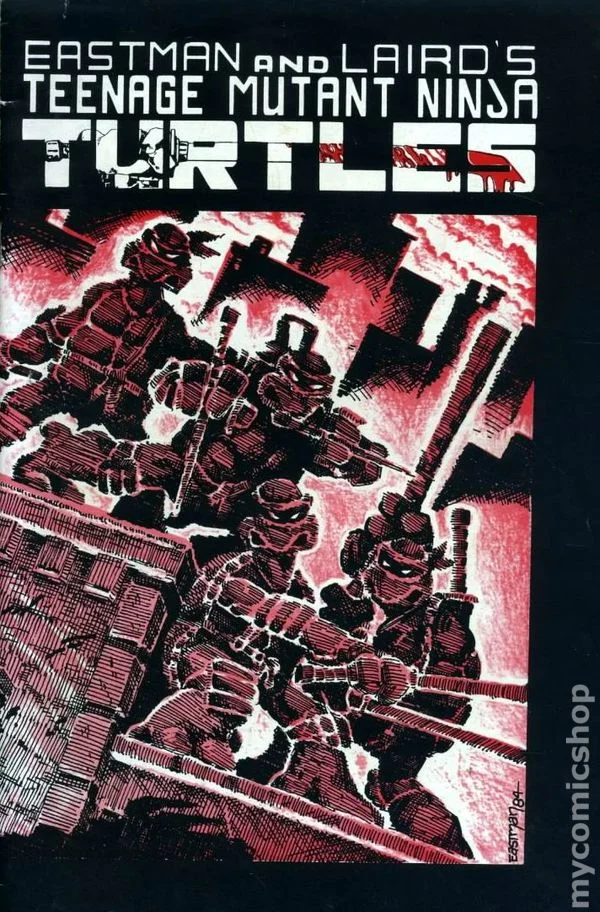 comics
The Joke That Got Out: How Two Roommates Made the Turtles in 1984
A doodle made to get a laugh in a Dover living room, a loan from an uncle, and a black-and-white book that never once explained that it was a joke.
Read →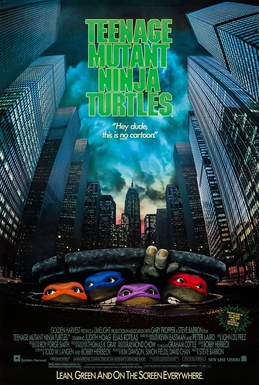 movies
Latex, Fiberglass and a Hong Kong Backer: Making the 1990 Turtles Film
Every big studio passed on a film about four mutant turtles. Jim Henson's Creature Shop built the suits that made the bet pay off.
Read →