
toys
A Toy Line That Needed a Cartoon First
Several toy companies turned the Turtles down. The one that said yes set a condition: a cartoon had to come first. Bebop and Rocksteady are what the toy company asked for next.
The usual order of things is that a cartoon makes children want a toy. The Teenage Mutant Ninja Turtles did it the other way round, the toy company asked for the cartoon.
Licensing agent Mark Freedman took the Turtles to several toy makers, and they passed, on the grounds that the idea was not popular enough to carry a line.1 Only Playmates Toys, a little-known California company, showed interest, and it came with a condition attached: a cartoon had to exist first. The history ties that demand to the example of He-Man, G.I. Joe and Transformers, all of which had sold toys on the back of an animated series.
So the cartoon exists because Playmates made it a condition of the toy deal. Eastman and Laird signed with Murakami-Wolf-Swenson, and the miniseries aired at the end of 1987. Playmates and its staff served as associate producers and contributing writers.2
Bebop and Rocksteady
Two of the show’s henchmen were added for the toy line. Bebop and Rocksteady first appear in “Turtle Tracks,” the very first episode. They reached the comics only later, in Teenage Mutant Ninja Turtles Adventures in August 1988.3 Peter Laird designed them while the Playmates deal was under negotiation, because the toy company wanted more characters to release; David Wise, the writer, has said he gave them their names and personalities after Fred Wolf told him to put more mutants in the series.
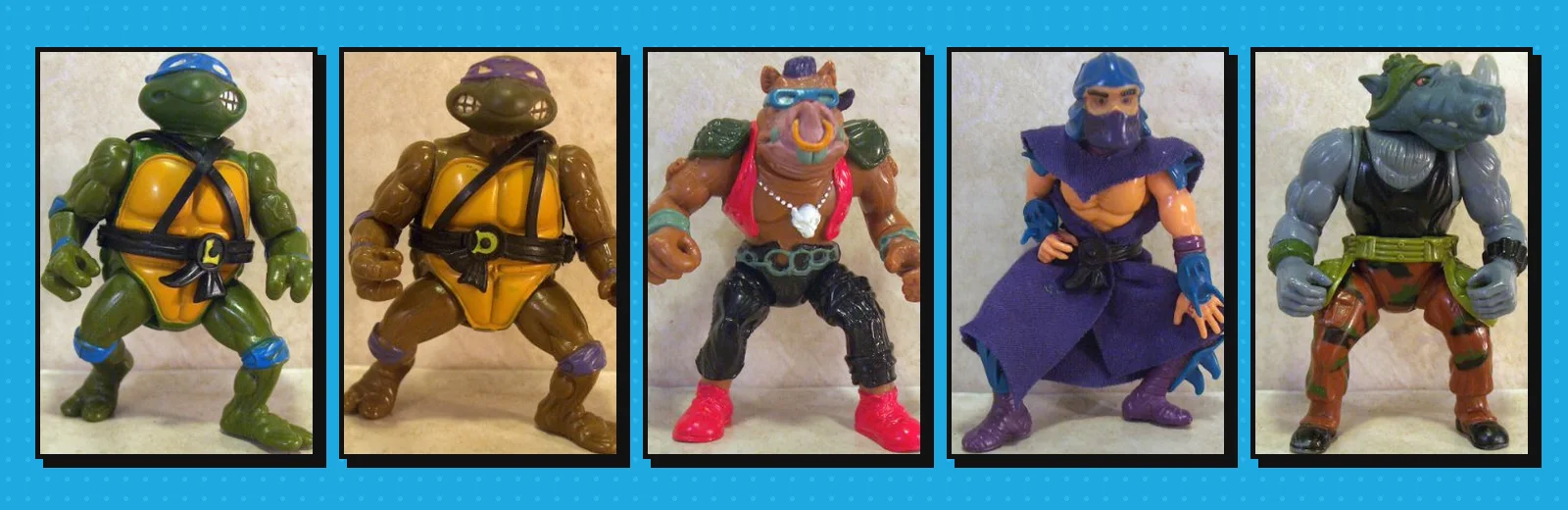
They were among the first ten figures Playmates released in 1988. Bebop is a warthog in pink sneakers and Rocksteady a rhinoceros in camouflage trousers.

What shipped, and when
The first wave reached stores in the summer of 1988, a few months after the miniseries. The roster mirrored the cast of the miniseries: the four Turtles, Splinter, April, Shredder, Rocksteady, Bebop and a Foot Soldier. Vehicles came with it, the Cheapskate, the Turtle Trooper, the Turtle Blimp and the Foot Knucklehead. Each figure had at least seven points of articulation and a weapon of its own.
The second series in 1989 added ten figures, split between allies and enemies, along with new vehicles and accessories, the line’s first playset and the first of the wind-up “Wacky Action” Turtles. Storage Shell Donatello followed in 1990, with the other three Turtles a year behind him. Playmates made roughly four hundred figures between 1988 and 1997, along with dozens of vehicles and playsets. The line is usually credited with about $1.1 billion in sales over its first four years, which put the Turtles behind G.I. Joe and Star Wars among the best-selling action figures of the day.4

Why it ended
The decline is usually put down to three things at once: more competition on the toy aisle, a limited supply of new figure concepts, and the end of the cartoon that had been doing the selling. The live-action series Ninja Turtles: The Next Mutation did not last, and figure production then stopped for several years.
The vintage Playmates shelf on this site runs figure by figure from the first wave on, and the modern lines that descend from it sit one click over on the toys page. Start with Playmates 1988 to 1997.
Footnotes
-
This account of the pitch follows the standard history of the toy line as summarised on Wikipedia. We have not seen the licensing paperwork itself, and some details of who said what to whom are reported secondhand. ↩
-
The same history describes the series as designed to sell the figures. The 1987 series itself is covered in our episode guide. ↩
-
First-appearance details for Bebop and Rocksteady follow Wikipedia’s entry on the pair. The accounts of who created them differ in emphasis, with Laird credited for the designs and Wise for the characters and names, and the two are not strictly in conflict. ↩
-
The sales figure is repeated in many histories of the line; we could not trace it to a primary source such as a Playmates annual report, so treat them as the commonly cited number rather than an audited one. ↩
KEEP READING
MORE FEATURES
 cartoons
Going Back to the Sewer: How the 2003 Series Found the Comic's Tone
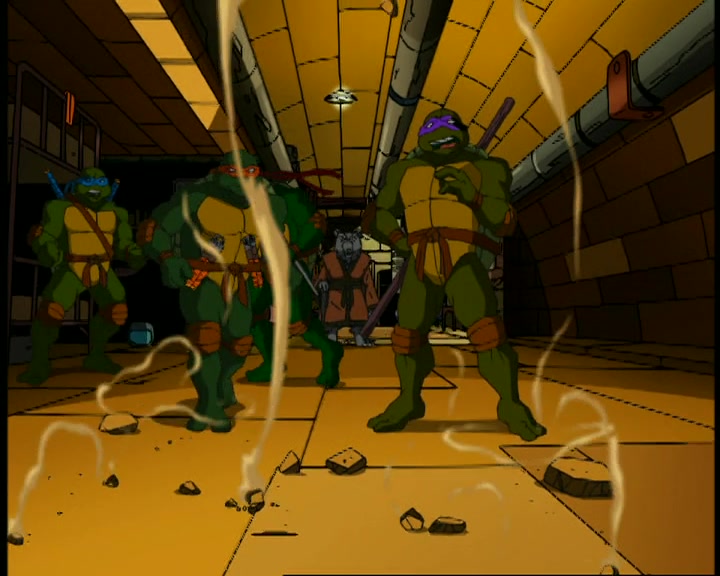
The 4Kids Turtles of 2003 opened with a scene lifted from the first Mirage issue and spent the next several seasons trying to keep four brothers and their father at the centre of a bigger story.
Read →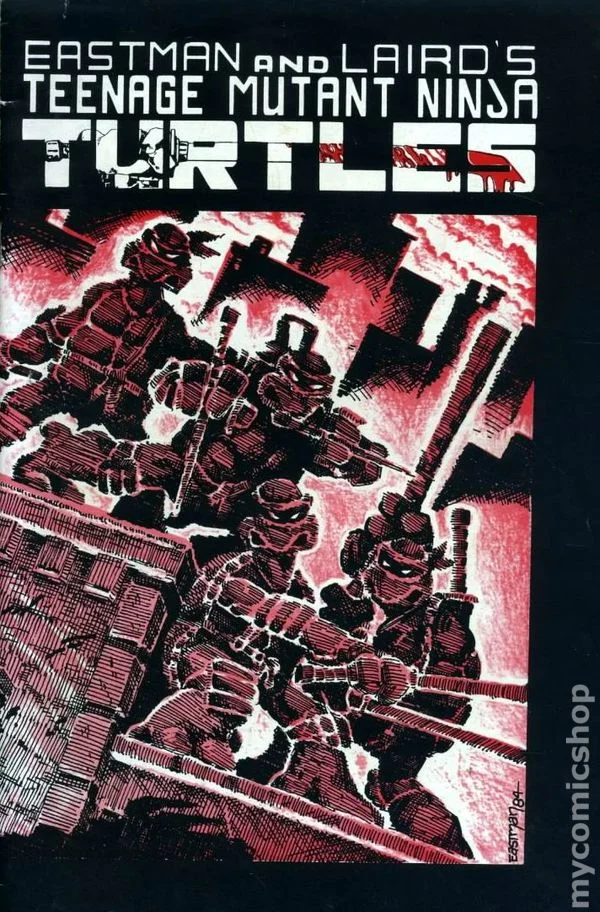 comics
The Joke That Got Out: How Two Roommates Made the Turtles in 1984
A doodle made to get a laugh in a Dover living room, a loan from an uncle, and a black-and-white book that never once explained that it was a joke.
Read →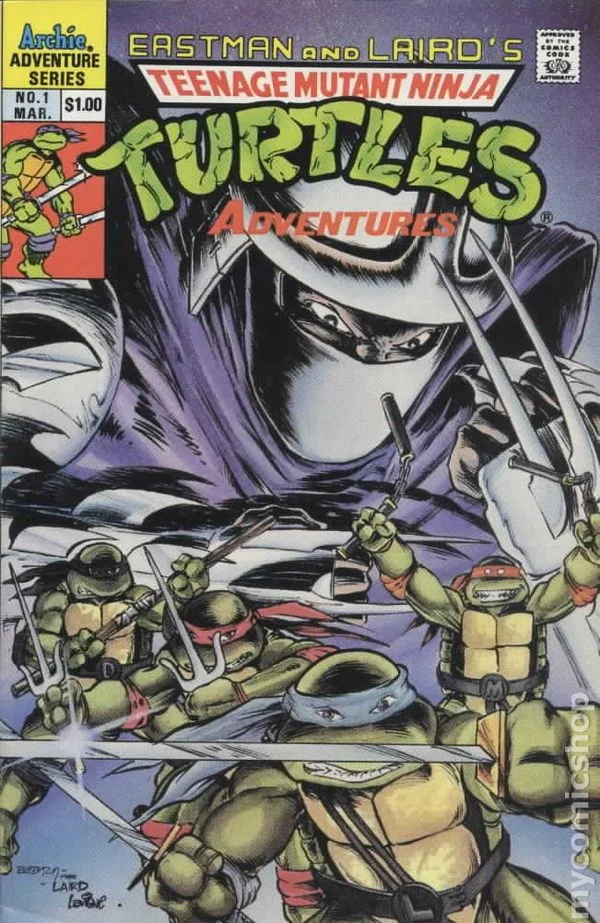 comics
The Turtles Archie Made: A Cartoon Tie-In That Grew Its Own World
Archie's Teenage Mutant Ninja Turtles Adventures began as an adaptation of the cartoon and became the place where the Turtles' universe got bigger than either the cartoon or the black-and-white book.
Read →