Mateus Santolouco
An ad man from southern Brazil pitched IDW a story about a 16th-century swordsman — and ended up building the mythology the entire modern Turtles universe stands on.
Porto Alegre, Brazil
Part One
The long road from Porto Alegre
Mateus Santolouco's origin story has no comic shop on the corner and no internship at Marvel. Born in 1979 in Porto Alegre, the capital of Brazil's southernmost state, he studied advertising and marketing and spent nine years in the local ad industry doing illustration, character design and animation — commercial work, on deadline, to spec. It's an unglamorous apprenticeship that explains a lot about his comics: the man composes a page like someone who has spent a decade being paid to direct the viewer's eye.
In 2006 he quit advertising for comics full-time, and the American market found him fast. His North American debut, the Boom! Studios crime mini 2 Guns with writer Steven Grant, did something almost no indie mini ever does — it became a Hollywood film, the 2013 Denzel Washington / Mark Wahlberg vehicle of the same name. DC came calling next: Santolouco drew the first season of Dial H, China Miéville's beloved, deeply weird New 52 cult book, where every issue demanded a dozen new absurd character designs. Advertising had taught him speed; Dial H proved the imagination.
So by the time he landed on IDW's young Teenage Mutant Ninja Turtles ongoing in 2012, Santolouco was that dangerous thing: a fully-formed stylist nobody had built a franchise around yet. That lasted roughly a year.
Part Two
The pitch that rebuilt the Foot Clan
What changed everything wasn't an assignment, it was an idea. Santolouco didn't just want to draw the Foot Clan — he wanted to explain it: who founded it, what it cost them, and why Oroku Saki is what he is. IDW let him run. The Secret History of the Foot Clan (2013), plotted and drawn by Santolouco with scripting help from Erik Burnham, invented the feudal-Japan spine of the entire IDW continuity: the swordsman Takeshi Tatsuo, betrayed and reborn; the witch Kitsune and her demon bargains; a Foot Clan whose four-hundred-year history finally made the Shredder a tragedy instead of a costume.
Read the IDW series today — any of it — and you are reading consequences of that mini. The Shredder's origin, Kitsune's long game, the Pantheon's shadow over the whole saga: that architecture came from Santolouco's pitch. Licensed-comic artists serve existing mythology. Santolouco built new mythology, and the license absorbed it as canon.
Part Three
City Fall and the style that took over
His drawing is built for exactly this material. Angular, whip-fast figures with real weight behind the speed. Layouts that tilt and crash like storyboards from a film he's directing in his head. And a rare double fluency — equally at home in present-day New York grime and Muromachi-era Japan, often on facing pages. His Shredder, all blades and silhouette, is arguably the definitive modern take, and his designs for Alopex-era Foot assassins and feudal flashbacks set the visual grammar every later IDW artist worked inside.
When IDW needed an artist for City Fall (2013) — the seven-part saga where the Shredder takes Leonardo and turns him into his own weapon — Santolouco was the only realistic choice. City Fall is still the high-water mark fans point to when asked why the IDW run is the best Turtles comic since Mirage Volume 1. Two years later he drew the giant-sized TMNT #50, the Splinter-versus-Shredder climax the first fifty issues had been building toward. The biggest moments of the modern continuity, again and again, landed on his table.
By Shredder in Hell (2019) he no longer needed a writer or a colorist: he wrote it, drew it, and painted it himself — five issues of Oroku Saki falling through the underworld, rendered in expressionist watercolor that looks like nothing else ever published under the TMNT logo. It is the single strongest argument that the best Turtles artist of the modern era works out of Porto Alegre.
The Wall
The essential Santolouco
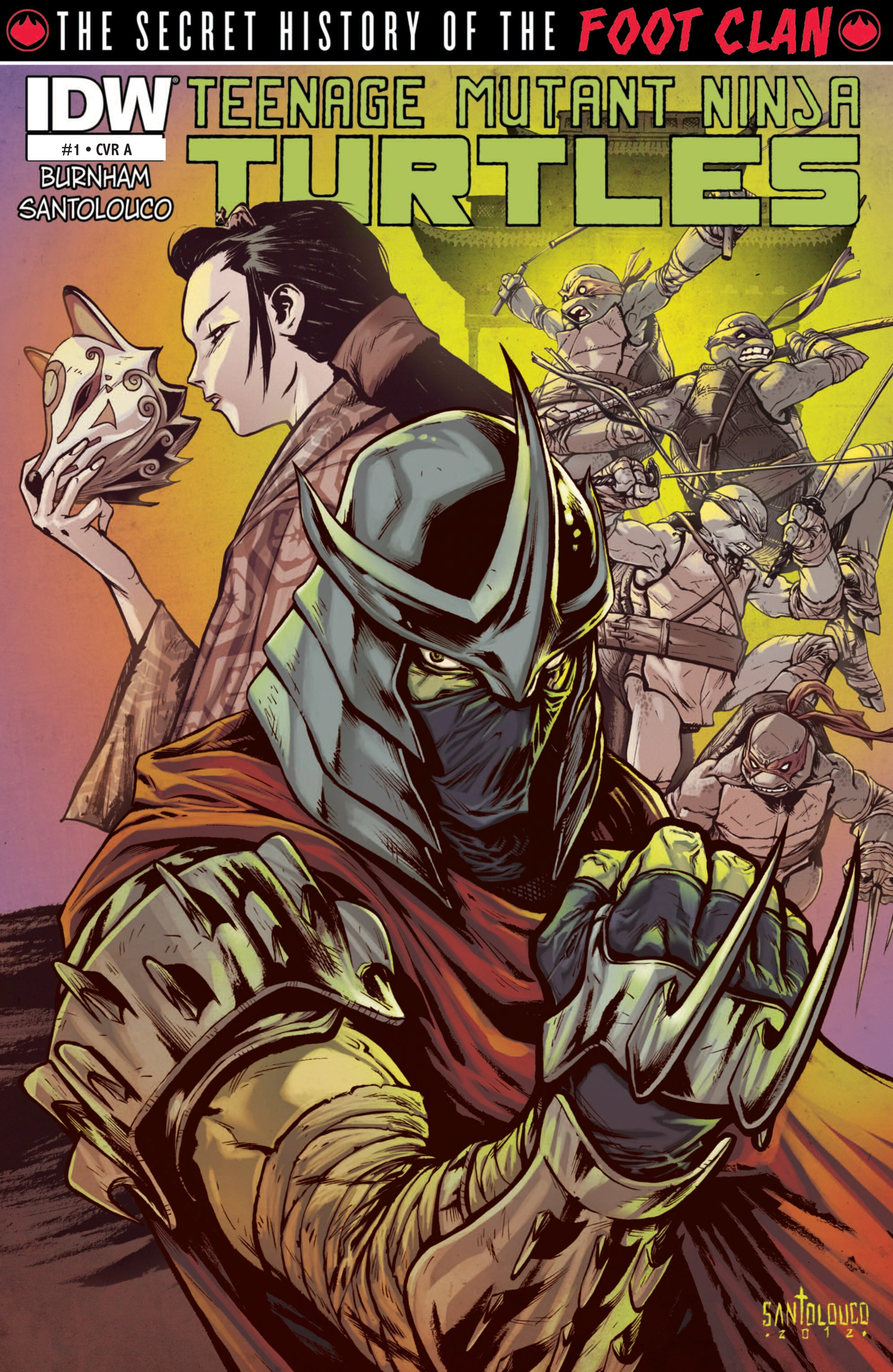
The Secret History of the Foot Clan #1
Story and art by Mateus Santolouco. Script with Erik Burnham.
Buy this issue at MyComicShop ↗
The book that made his name, with a cover half the variant artists in the industry have imitated since. Feudal flashbacks and present-day intrigue braided into the mini that quietly became the spine of fifteen years of IDW continuity — and the origin of IDW's Shredder, a Santolouco creation, full stop.
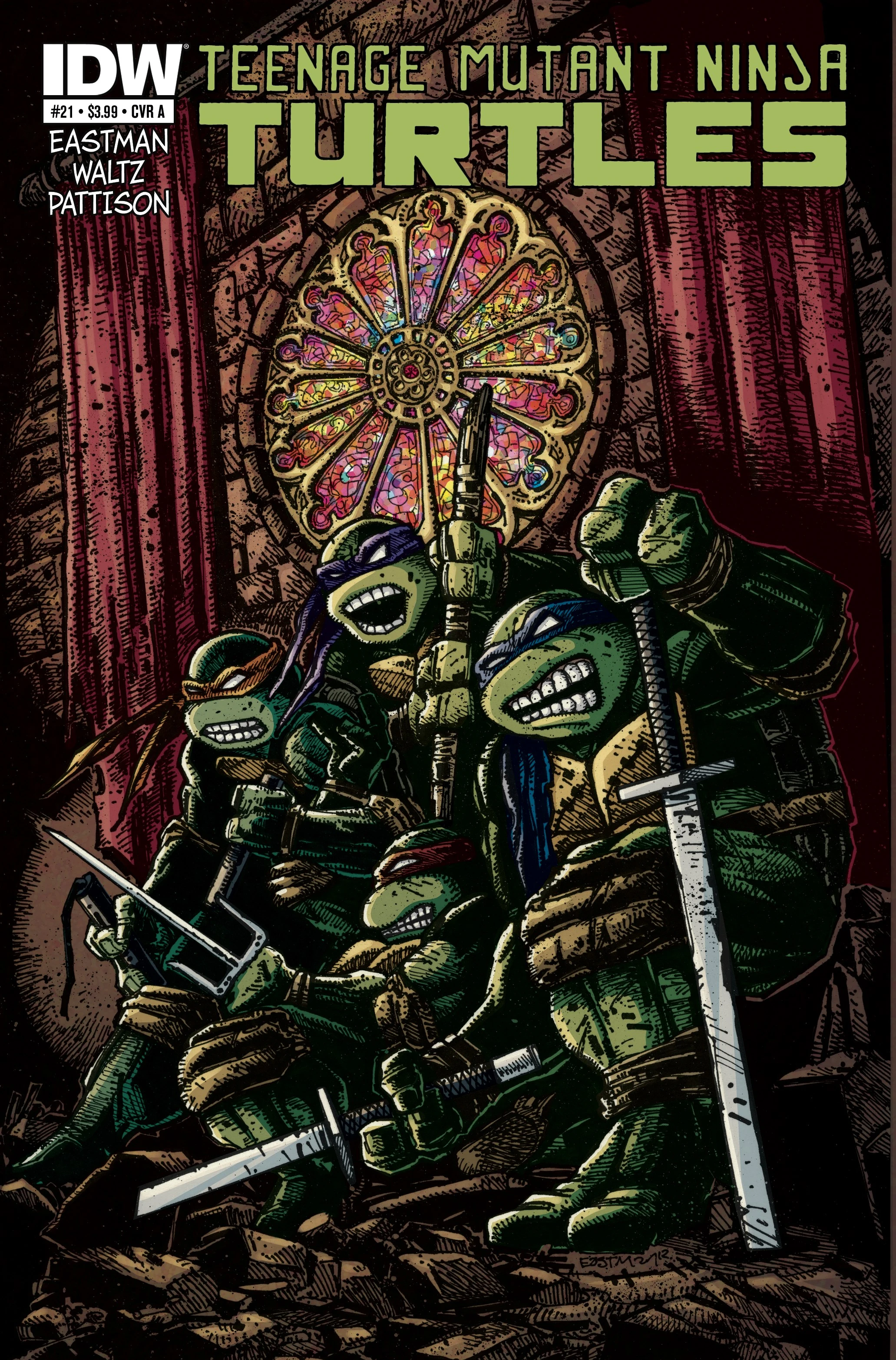
TMNT #21 — City Fall: Prologue
Cover and interior art by Mateus Santolouco.
Buy this issue at MyComicShop ↗
The calm before. Casey Jones bleeding out on a rooftop, the Shredder declaring war, and Santolouco setting the visual temperature for the biggest story IDW had attempted to that point.
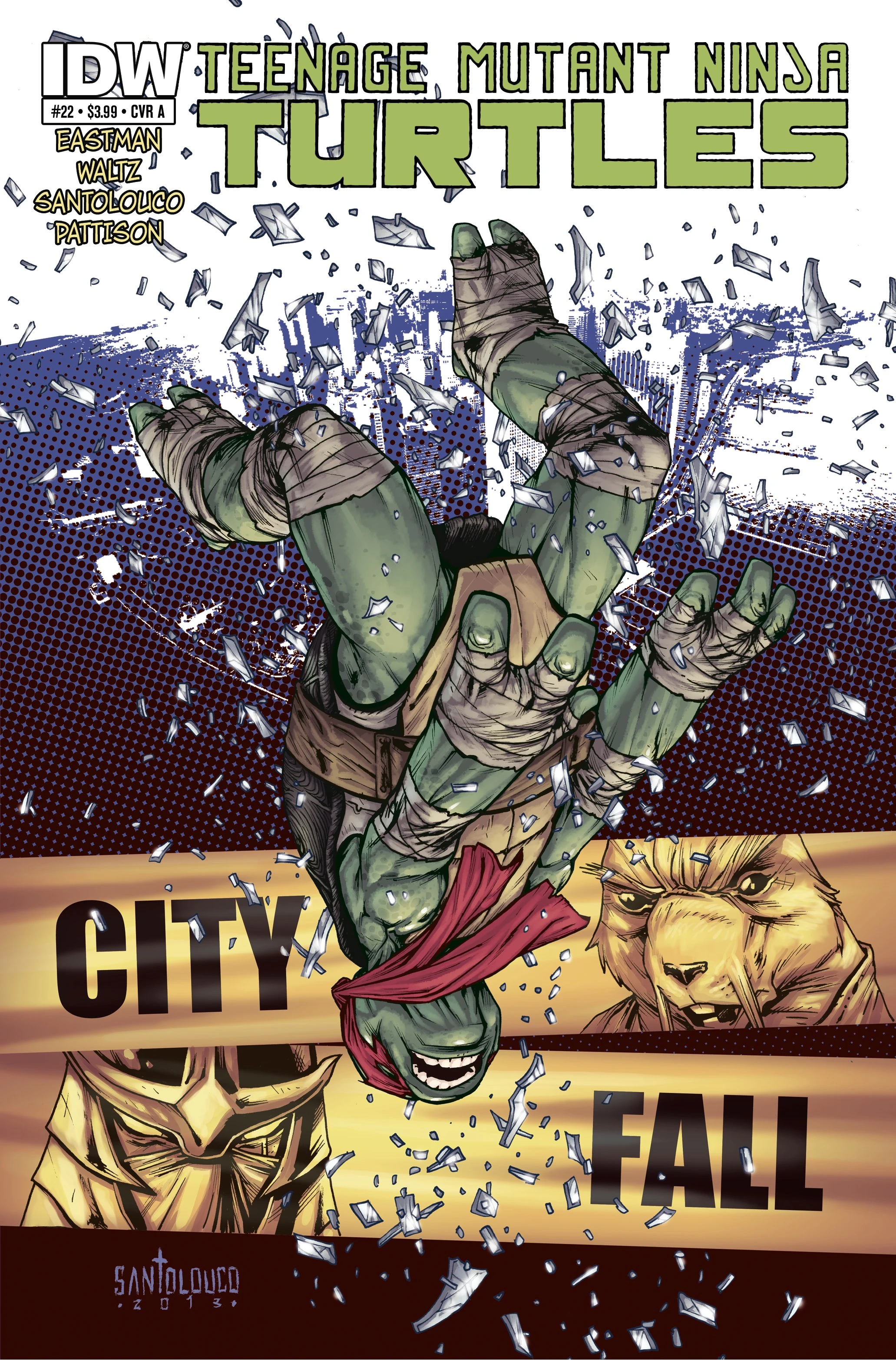
TMNT #22 — City Fall, Part 1
Art by Mateus Santolouco. Script by Tom Waltz.
Buy this issue at MyComicShop ↗
Leonardo taken, brainwashed, and remade as the Shredder's chunin. Seven issues of escalating gang war that remain the high-water mark of the modern series — and the arc that locked Santolouco in as the event artist of the IDW era.
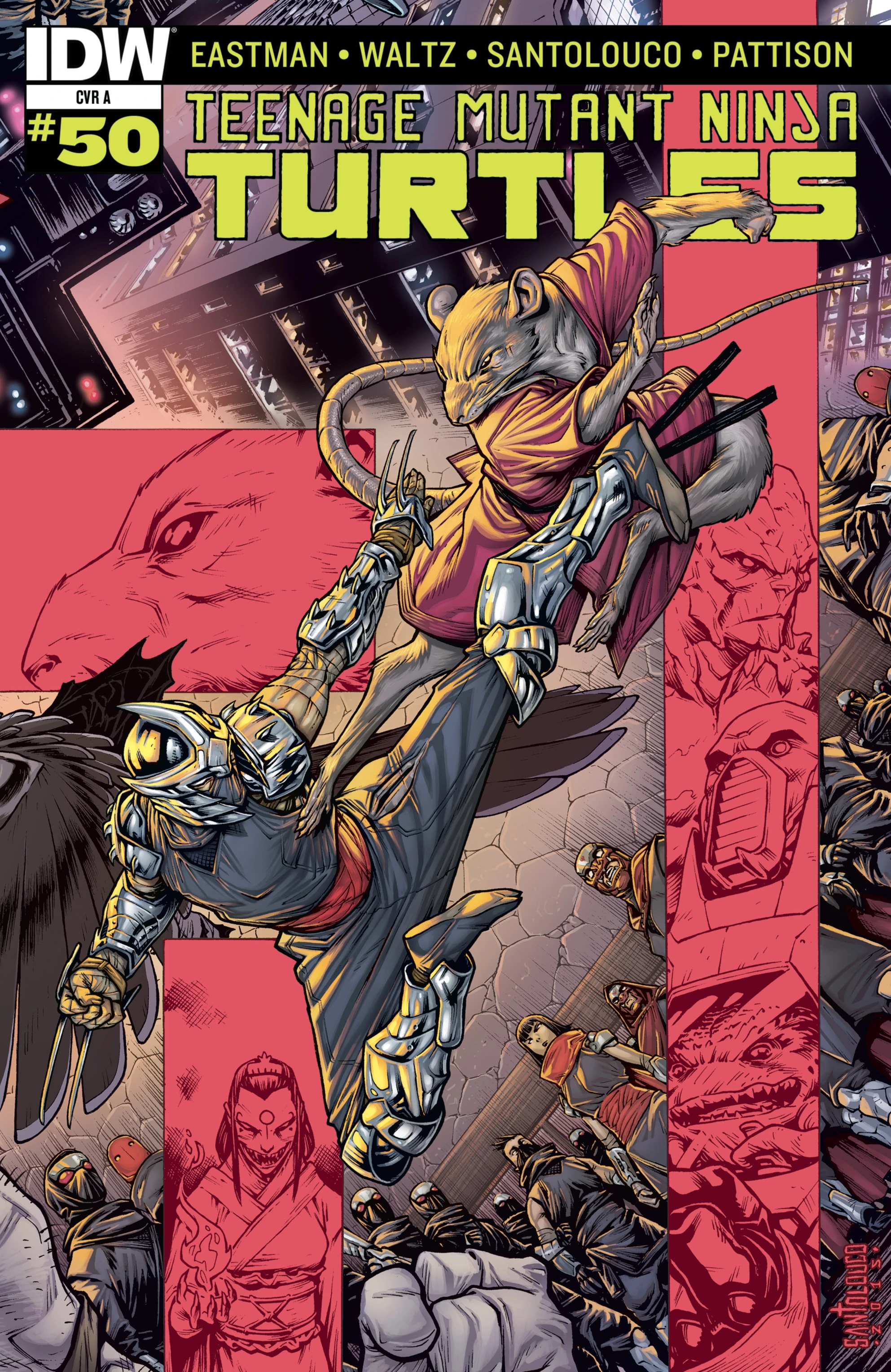
TMNT #50 — Vengeance, Part 6
Cover by Mateus Santolouco. Script by Tom Waltz.
Buy this issue at MyComicShop ↗
The giant-sized payoff of the series' first fifty issues: Splinter versus the Shredder, to the death, with everything the continuity had built riding on it. When IDW needed its milestone issue to feel like an event, this is the cover it led with.
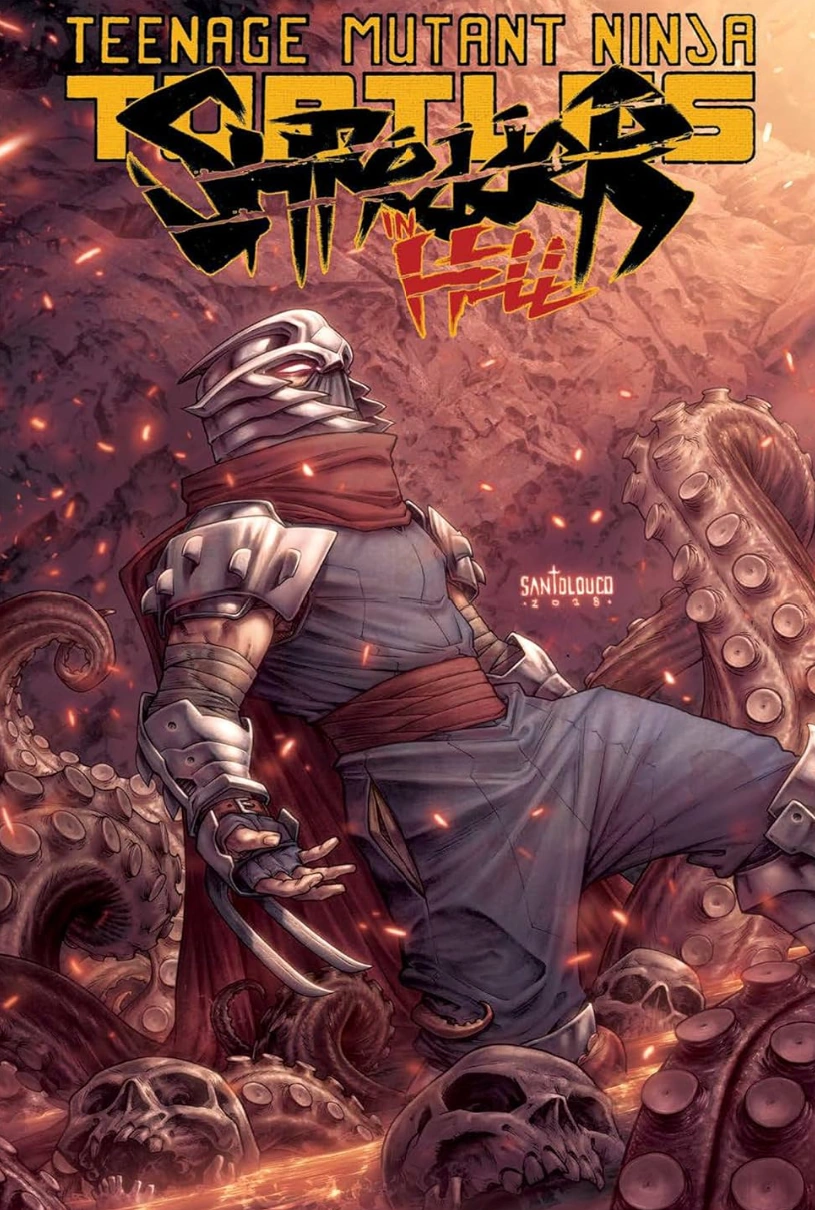
Shredder in Hell #1
Written, drawn and painted by Mateus Santolouco.
Buy this issue at MyComicShop ↗
Oroku Saki dead and falling through the underworld. Santolouco alone on every job — script, line, paint — producing the most visually ambitious book IDW has published under the TMNT logo. If you want one argument for him as the modern era's best, it's this.
Last Word
Why Santolouco matters
Forty years of Turtles comics have produced exactly two artists whose contribution is structural rather than stylistic: Eastman, who built the house, and Santolouco, who excavated the foundations and found four centuries of history down there. The feudal Foot Clan, Tatsuo, Kitsune, the Shredder's tragedy — none of it existed before his pitch, and none of the modern continuity stands up without it. Ask today's readers to name the best artist ever to draw the book and his name comes back more often than anyone's, the co-creators included. Not bad for an ad man from Porto Alegre.
Artwork via Turtlepedia community uploads (CC-BY-SA) and public auction records, self-hosted on the ninjaturtles.tv image CDN. Part of the ninjaturtles.tv Artist Series.