Kevin Eastman
A joke sketch, a $1,200 loan from his uncle, and 3,275 copies of a black-and-white comic. What happened next was the biggest indie-comics success story of all time.
Portland, Maine
Part One
A joke between roommates
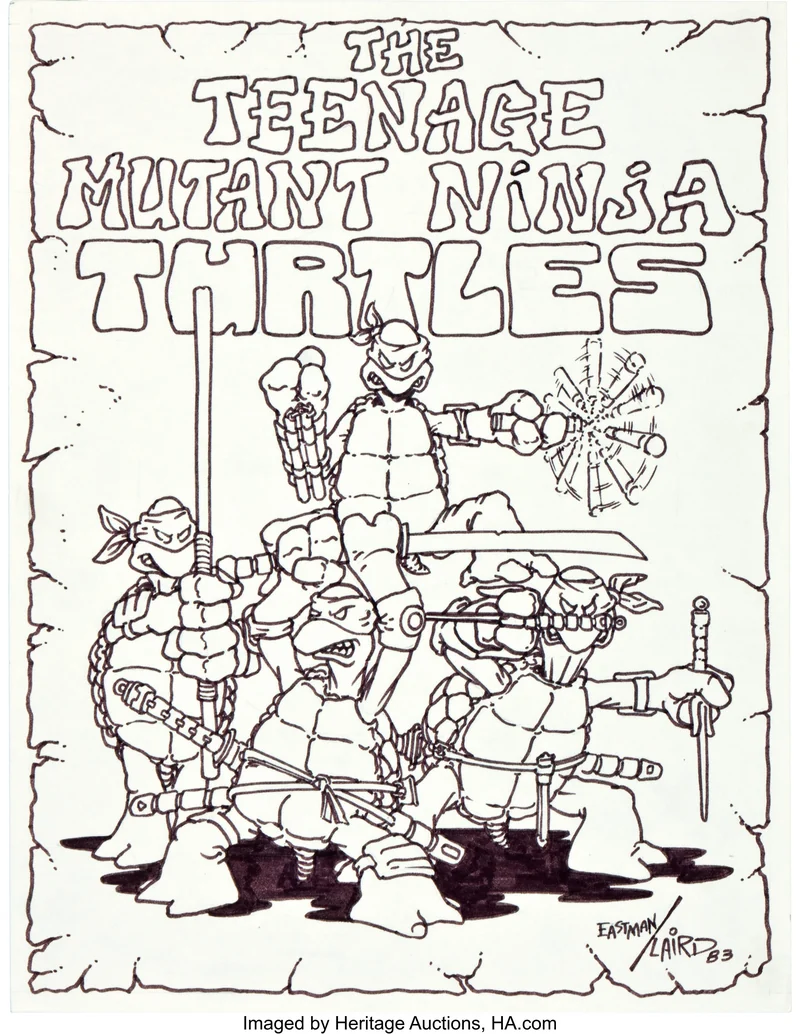
Late November 1983. A rented house in Dover, New Hampshire. Kevin Eastman — 21 years old, short-order cook, art-school dropout — was killing an evening watching bad TV with Peter Laird, a slightly older illustrator he'd met through a local arts paper. Eastman doodled a squat, masked turtle standing upright with nunchaku strapped to its forearms, slid it across the table, and wrote "Ninja Turtle" on it. Laird laughed, then did the thing that changed both their lives: he drew a better one. By the end of the night Eastman had drawn all four, Laird had added the word "Teenage Mutant" to the name, and the two had agreed, half-joking, that this was the best idea either of them would ever have.
They were right, but nobody else knew it yet. Over the next five months the pair wrote and drew a forty-page one-shot in a style that mashed up everything they loved — Frank Miller's Ronin and Daredevil, Jack Kirby's monster books, Richard Corben's underground grit. Eastman's pencils and inks gave the book its muscle: heavy spotted blacks, brawling figures, staging that read like a midnight kung-fu double feature. To print it, Eastman borrowed $1,200 from his uncle Quentin; Laird threw in a tax refund. They named their "studio" Mirage because there wasn't one — it was a kitchen table.
TMNT #1 debuted at a small comic convention in Portsmouth, New Hampshire on May 5, 1984: 3,275 oversized black-and-white copies, promoted with a single press release and one well-placed ad in Comics Buyer's Guide. The ad cost more than they could afford. It sold out the print run in weeks.
Part Two
The black-and-white boom
What happened over the next two years has a name in comics history: the black-and-white boom, and TMNT #1 is the book that detonated it. Second, third, fourth printings followed; back-issue prices for the first print went vertical; and dozens of publishers rushed out their own oddball animal parodies — Adolescent Radioactive Black Belt Hamsters, Pre-Teen Dirty-Gene Kung-Fu Kangaroos — trying to catch the same lightning. The bubble eventually burst and took half the imitators with it, but Mirage wasn't an imitator. The book underneath the gimmick was good, and it kept selling on its own merits.
Eastman and Laird worked the way few collaborators ever have: trading pages, pencilling over each other's layouts, inking each other's pencils, jointly signing everything. The first eleven issues, plus the micro-series one-shots, are effectively a single four-handed artwork. As the money arrived they did something unusual for two suddenly rich young men — they hired their friends. Jim Lawson, Michael Dooney, Eric Talbot, Steve Lavigne and A.C. Farley turned Mirage Studios in Northampton, Massachusetts into a clubhouse that produced Turtles comics for the next two decades.
Part Three
How a zine became a phenomenon
In 1986 a young licensing agent named Mark Freedman cold-called Mirage and asked a question nobody in comics was asking: what if this thing were bigger than comics? Freedman shopped the Turtles to toy companies and got laughed out of most rooms — mutant turtles named after Renaissance painters was a tough pitch in the He-Man era. The company that said yes, Playmates Toys, was a modest Hong Kong-backed operation that hedged its bet with one condition: there had to be a cartoon to sell the toys.
The five-part animated mini-series that aired in December 1987 softened Eastman and Laird's R-rated alley fighters into pizza-obsessed wisecrackers — and detonated on contact with America's children. The syndicated series ran nearly a decade and 193 episodes. The Playmates line became one of the best-selling action figure lines in history, moving well over a billion dollars of Turtles product inside its first five years. By 1990 "Turtlemania" was a documented retail event: thousands of licensed products, a Pizza Hut-sponsored stadium concert tour, cereal, video games, and a live-action film that cost $13.5 million and grossed over $200 million worldwide — at the time, the most successful independent film ever released.
Hold on to the absurdity of that chain of events. A self-published parody comic, printed on borrowed money in a print run smaller than a high-school graduating class, became the defining children's franchise of the late eighties and early nineties — without Marvel, without DC, without Hollywood's permission. It rewrote the math on what creator-owned work could be worth, and every indie-to-franchise story since, from Hellboy to The Walking Dead to Invincible, walks a road Eastman and Laird paved.
Part Four
What Eastman did with the money
Eastman spent the windfall like a man trying to give the entire comics industry a leg up. In 1990 he founded Tundra Publishing, an idealistic, creator-owned imprint that published Alan Moore, Dave McKean, Mike Allred and dozens of others on terms wildly generous to the artists — and burned through a reported $14 million before folding into Kitchen Sink Press. He opened the Words & Pictures Museum of Fine Sequential Art in Northampton, one of the first serious museums devoted to comic art. And in the early nineties he bought Heavy Metal, the legendary adult-fantasy magazine that had shaped his teenage imagination, and ran it as owner and publisher for more than two decades, until 2014.
In 2000 he sold his share of the Turtles to Laird, and in 2009 Laird sold the whole property to Nickelodeon's parent Viacom. For a while it looked like Eastman's Turtle story was over. It wasn't.
Part Five
The homecoming and The Last Ronin
When IDW relaunched the TMNT comic in 2011, Eastman came back — not as a figurehead but as working co-writer with Tom Waltz, cover artist, and the continuity's spiritual compass. Then in 2020 he and Waltz dusted off a story he and Laird had plotted in 1987 and never published: one surviving Turtle, decades in the future, hunting the Foot through a cyberpunk New York to avenge his family. The Last Ronin, with Eastman's layouts finished by Esau and Isaac Escorza, became the best-selling book in IDW's history, spawned the Lost Years and Re-Evolution follow-ups, a video game, and an R-rated film in development. Thirty-six years after the first issue, the co-creator drew the franchise's biggest hit. Again.
The Wall
The essential Eastman
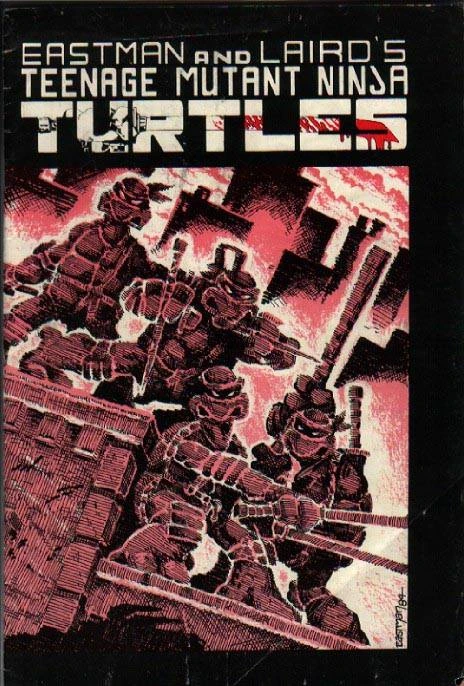
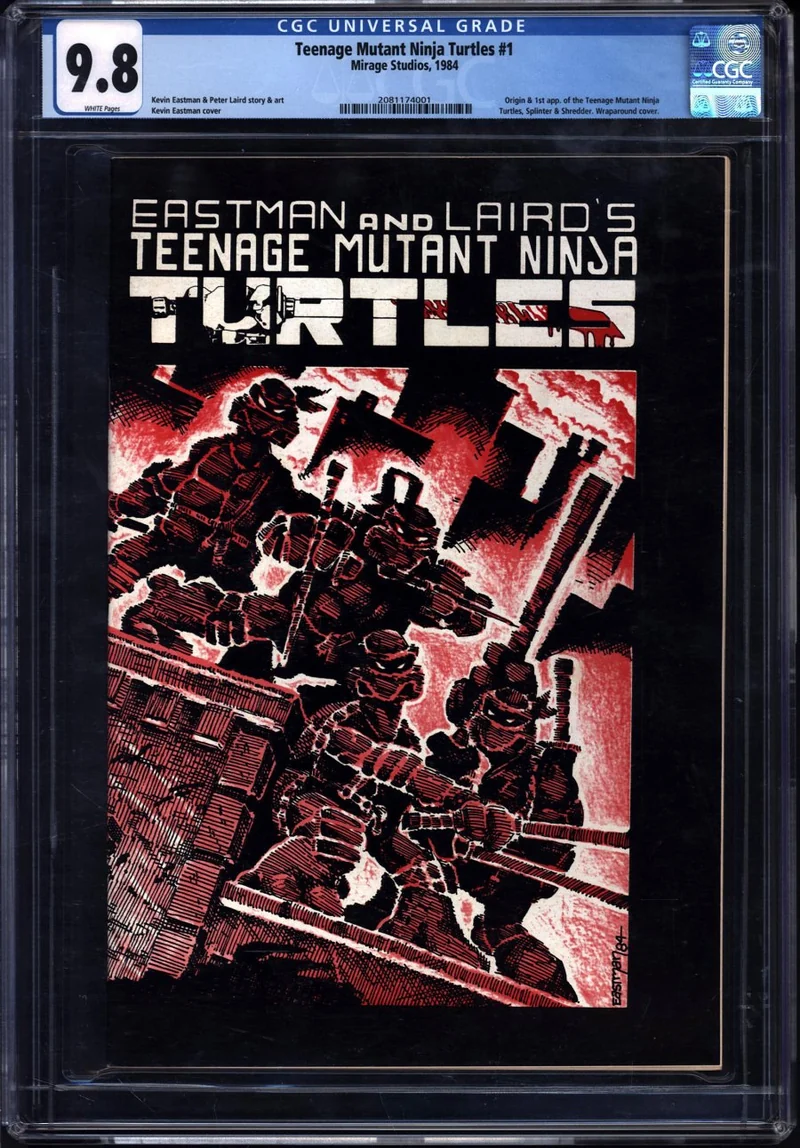
Teenage Mutant Ninja Turtles #1
Cover by Kevin Eastman. Story and art by Eastman & Peter Laird.
Buy this issue at MyComicShop ↗
The big bang. The cover composition is a straight-faced tribute to Frank Miller's Ronin #1 — the book that, along with Daredevil, the whole first issue lovingly parodies. First printing of 3,275 copies; the second printing added a dedication to Jack Kirby and Frank Miller, which tells you everything about where these two were standing when they jumped.
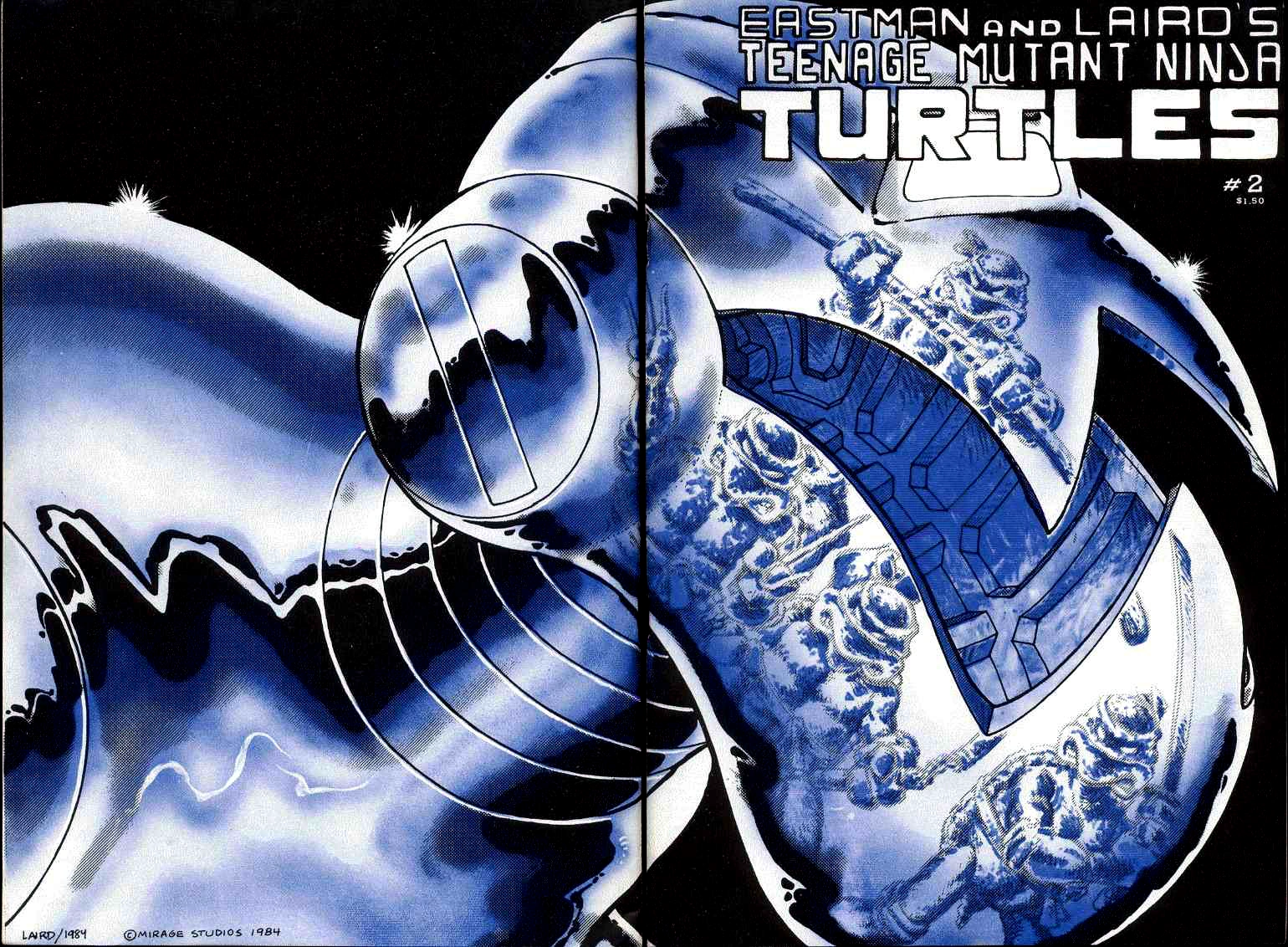
Teenage Mutant Ninja Turtles #2
Story and art by Eastman & Laird.
Buy this issue at MyComicShop ↗
Proof the first issue wasn't a fluke. Baxter Stockman, the Mousers, and a tougher April O'Neil all debut here, and the four-handed Eastman/Laird collaboration is at its purest — by their own admission, neither of them can always tell who drew what.
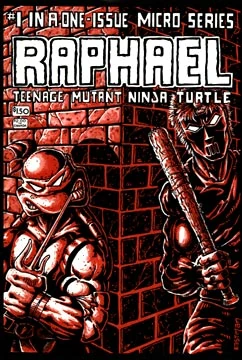
Raphael #1 — "Me, Myself and I"
Written and drawn by Kevin Eastman.
Buy this issue at MyComicShop ↗
The first micro-series one-shot, and the most purely Eastman book of the Mirage era — angry, funny, and fast. It introduces a hockey-masked vigilante swinging golf clubs at muggers: Casey Jones, Eastman's other immortal contribution to the mythology, created here as a parody of gritted-teeth eighties vigilantes and immediately too good to stay a joke.
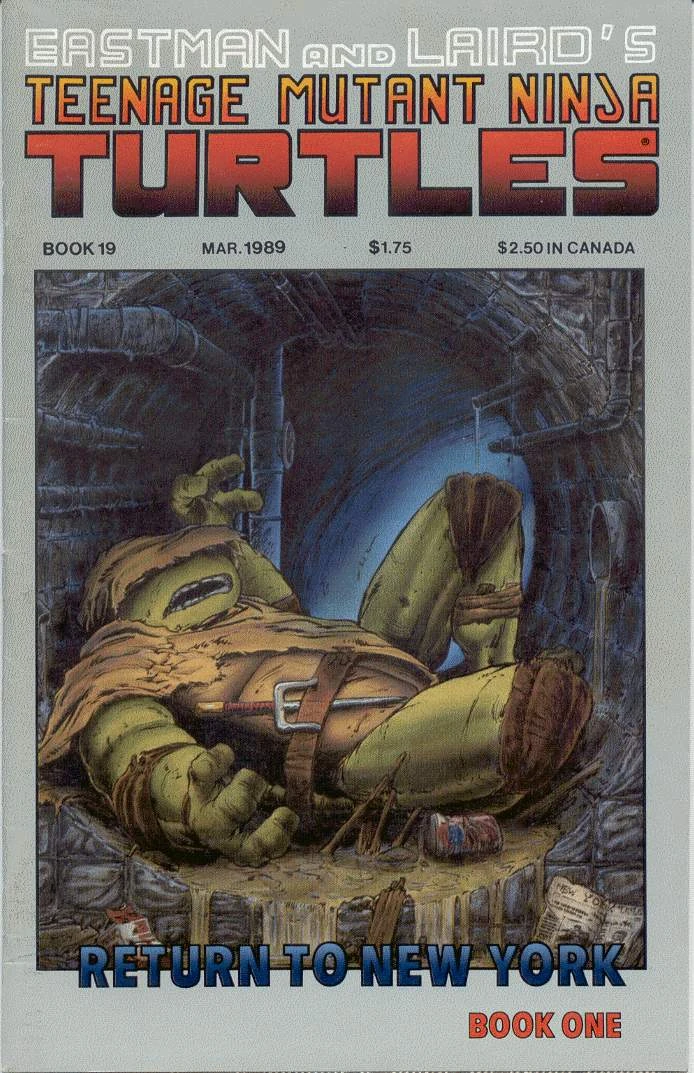
TMNT #19 — Return to New York, Book One
Story and art by Eastman & Laird.
Buy this issue at MyComicShop ↗
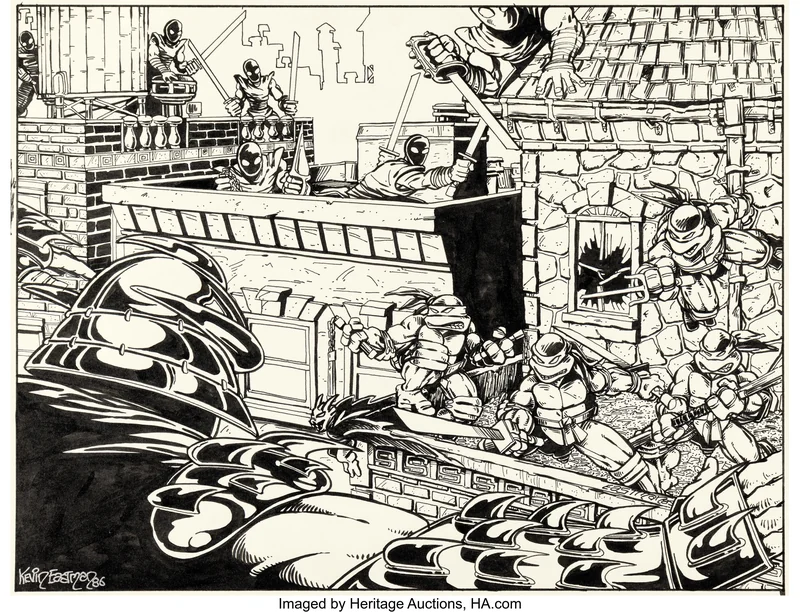
After a long stretch of guest-creator issues, the founders came back for a three-part war story: the Turtles retake New York and Leonardo settles accounts with the Shredder. The bloody rooftop finale in Book Three is, for a generation of Mirage readers, the definitive Turtles fight. This is the duo at their technical peak.
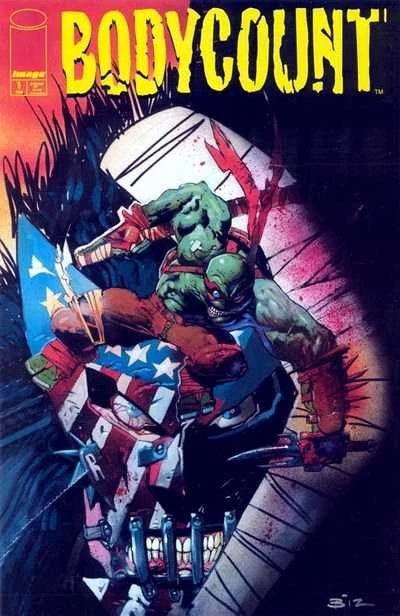
Bodycount #1
Pencils by Kevin Eastman. Inks by Simon Bisley.
Buy this issue at MyComicShop ↗
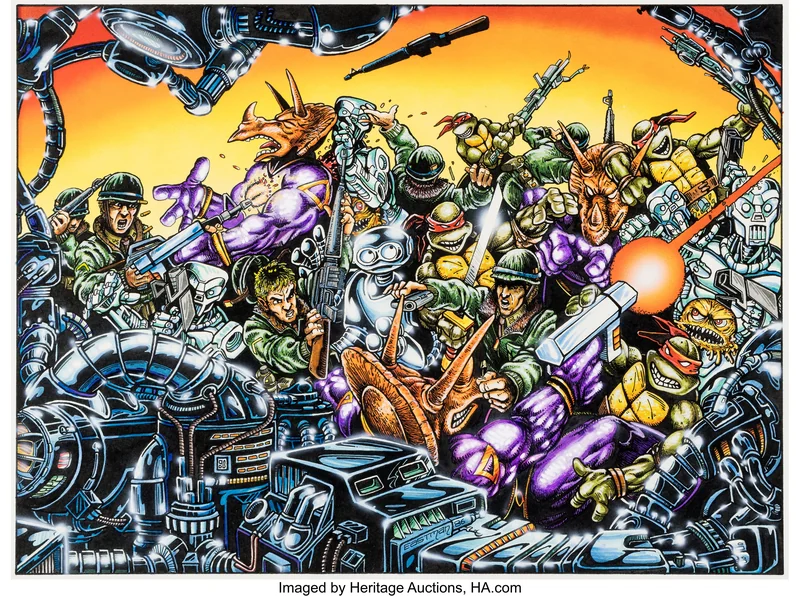
Eastman unchained. Four issues of Raphael and Casey Jones in a John Woo-style bullet ballet, inked by Simon Bisley at his most feral. Not canon and not apologizing. The clearest look at Eastman's raw pencils filtered through a collaborator who pushes louder instead of cleaner — and a cult classic for exactly that reason.
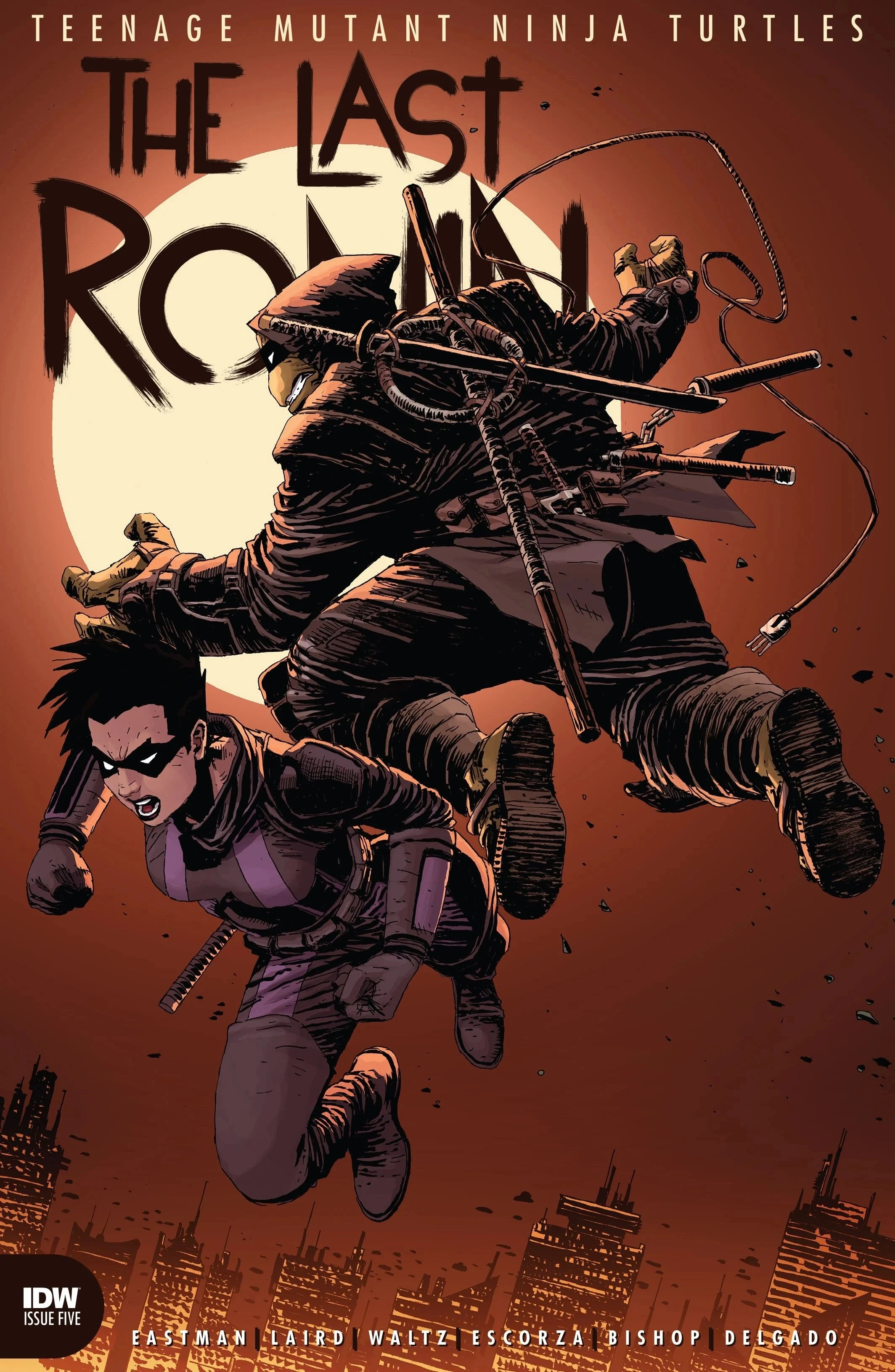
The Last Ronin
Story by Eastman, Peter Laird & Tom Waltz. Layouts by Eastman. Finishes by Esau & Isaac Escorza, with Ben Bishop.
Buy this issue at MyComicShop ↗
The 1987 "last Turtle" plot, finally told. One brother left alive, a city ruled by the Foot, and a generation of readers who grew up on the cartoon discovering the Mirage tone for the first time. The best-selling Turtles comic ever published, and the reason the property's dark timeline now spans games, sequels and a film in development.
The market on Eastman
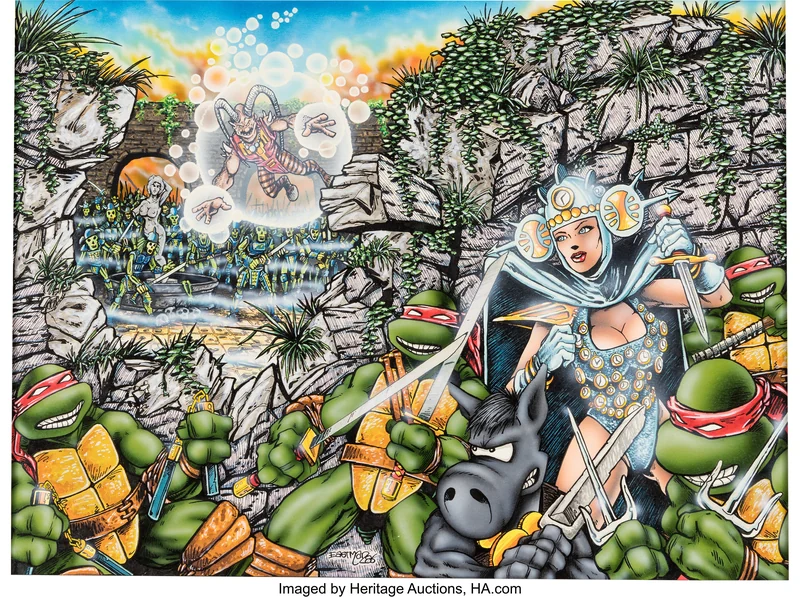
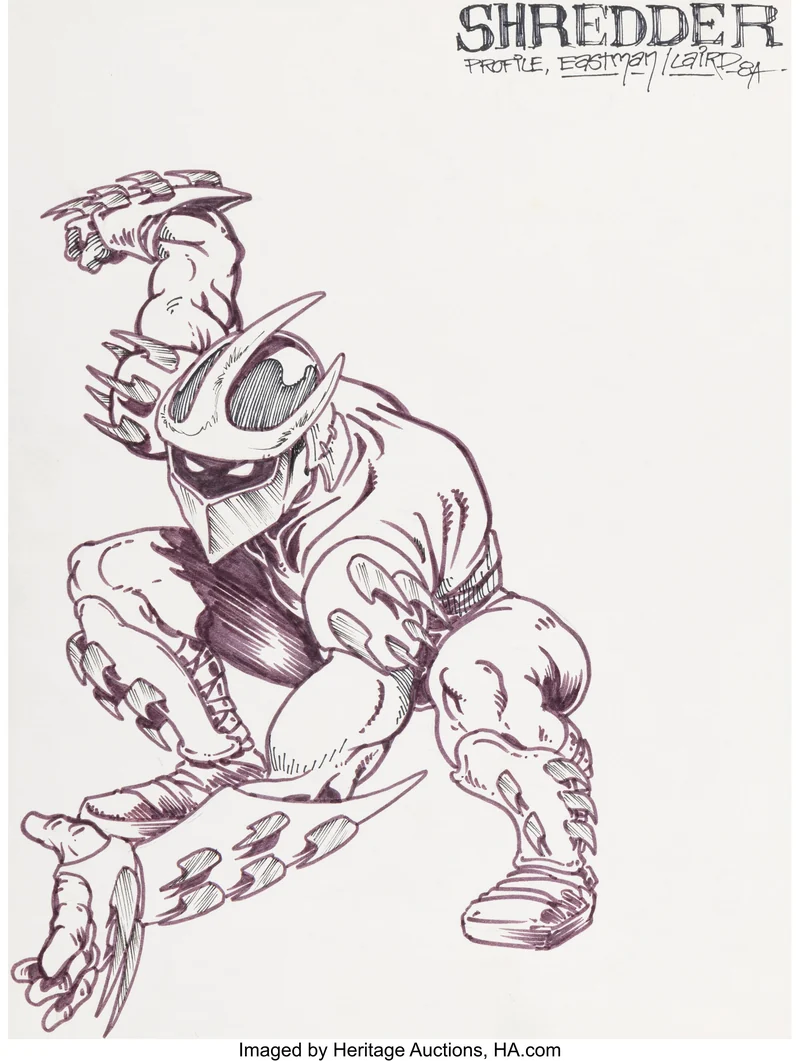
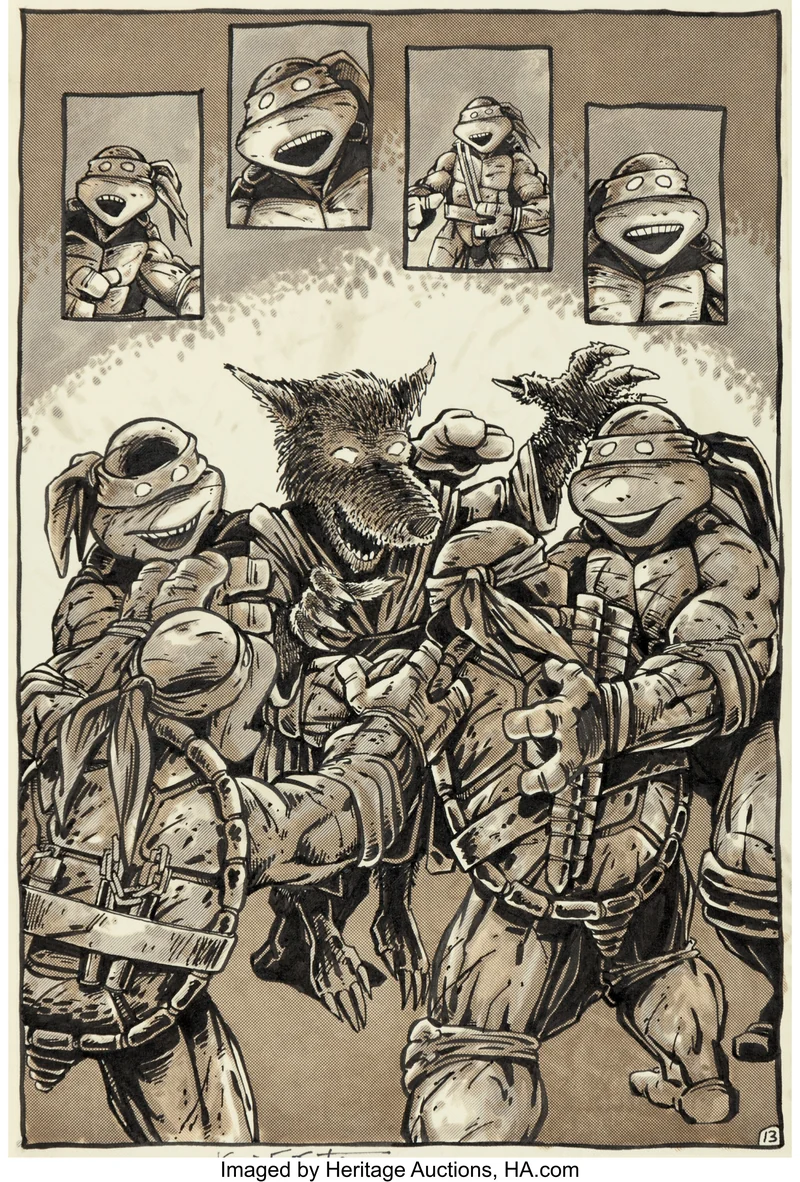
Original Eastman is now blue-chip comic art — his originals have gone from five figures to six inside a decade, and the published books trade like Silver Age keys. Seven benchmark results from the auction record:
Last Word
Why Eastman matters
Every Turtles artist since 1984 is in conversation with Kevin Eastman whether they choose to be or not — the grit, the shared silhouette, the idea that a parody can be played dead straight. But his real legacy is bigger than style. TMNT proved that two unknowns with a kitchen table and a borrowed grand could create, own, and keep a property that out-earned the majors — and that lesson reshaped the economics of American comics. The franchise has been a Saturday-morning cartoon, a toy aisle, an arcade machine and a blockbuster. Whenever it wants to remind you what it really is, it goes back to black-and-white and heavy ink. It goes back to Eastman.
Artwork via Turtlepedia community uploads (CC-BY-SA) and public auction records, self-hosted on the ninjaturtles.tv image CDN. Part of the ninjaturtles.tv Artist Series.